

Disclaimer:
I am not a medical professional. The information in this blog post is based on my personal experience healing my daughter’s eczema through dietary and lifestyle changes. This content is for informational purposes only and should not be interpreted as medical advice. Always consult with a qualified healthcare provider before making any changes to your or your child’s diet, treatment, or healthcare routine.
How it Started
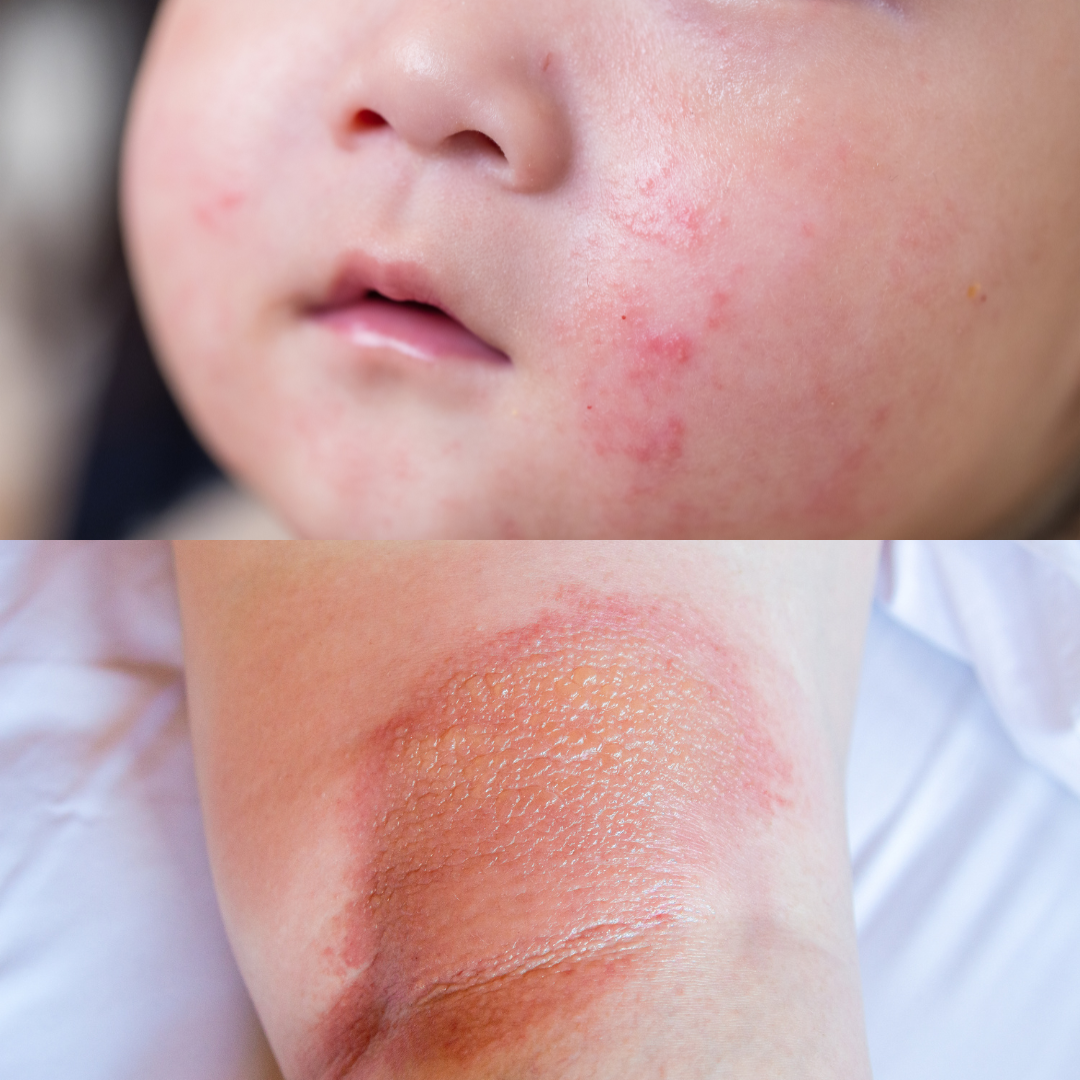
As soon as I stopped nursing my daughter, the eczema started. At first, there was a little irritation or redness, but that soon transformed into an awful-looking wound that spread to various parts of her body. Her neck looked like it had been badly scratched. The backs of her knees were always red and irritated. She itched and scratched constantly, aggravating the redness.
At first, I tried moisturizers. I tried baby lotions, then coconut oil, and finally beef tallow—trying to find a cure for what appeared to be a topical issue. Nothing worked, and her eczema just kept getting worse.
Finally, we took her for a checkup with her pediatrician, who suggested treatment with steroids. While I highly respect and appreciate our children’s pediatrician, that solution didn’t seem right to me. By that point, I had realized her eczema started right after I stopped nursing her, so I knew something was going on inside. I told the pediatrician I would try a few more things before exploring steroids or other methods.
Searching for the Cause
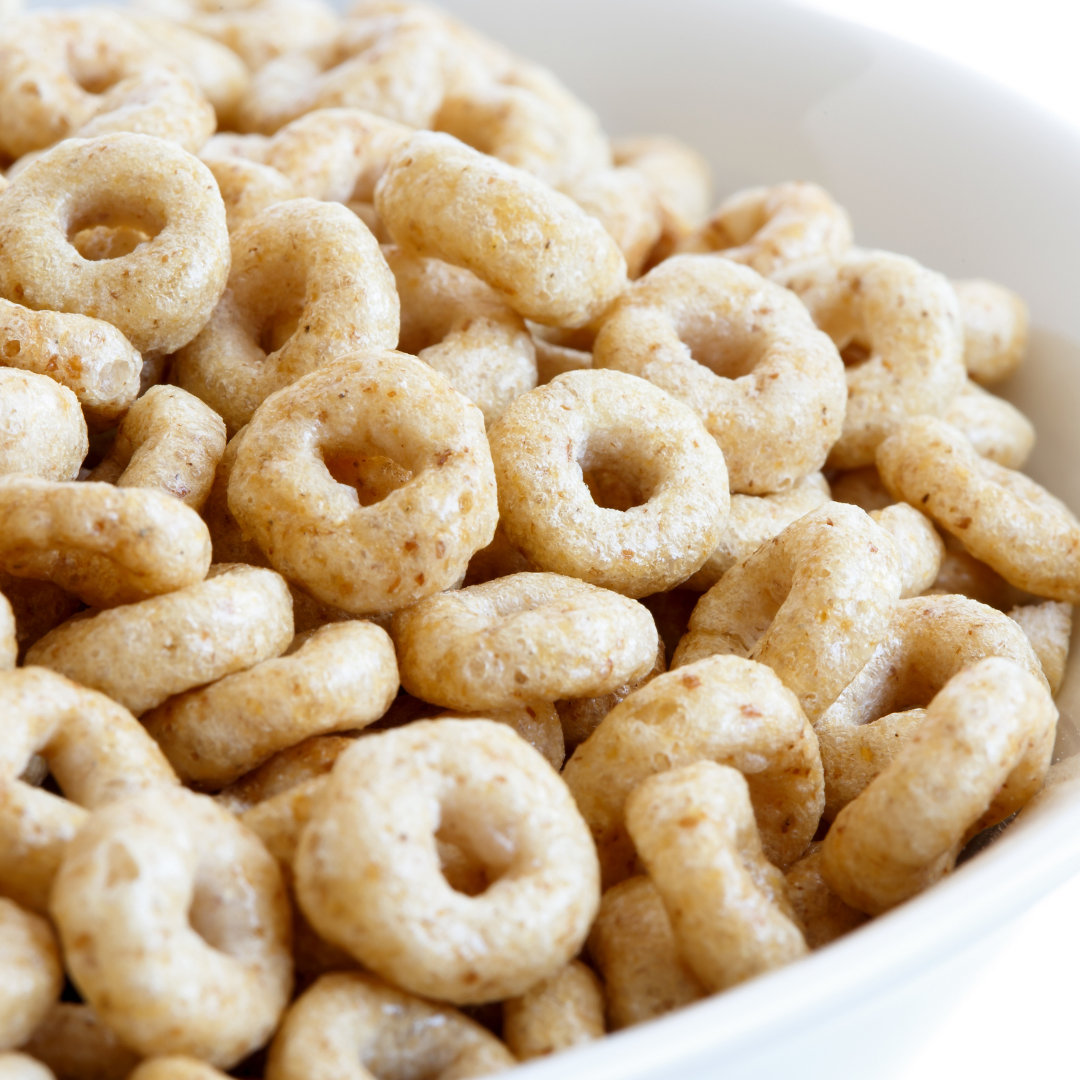
After the visit to the doctor, I started reading about potential causes of eczema. I read about how processed foods can disrupt the gut lining. While I had always considered us a healthy family, we did buy bread from the store and eat Cheerios, Goldfish crackers, and other convenience foods. Interestingly, I noticed that her eczema always seemed to get worse after she ate Cheerios and wondered if she had an oat allergy. Cheerios had a very simple ingredient list and were considered a healthy breakfast! I decided to at least stop feeding her Cheerios, praying that she didn’t really have an oat allergy.
While avoiding Cheerios seemed to help a little, she still had sores and itchiness all over her body. Still searching for a cure, I read about bone broth and probiotics and decided to give those a shot.
First, I started by learning to make yogurt. I was surprised by how few store-bought brands actually had live cultures I could use to make a new batch of yogurt! I finally found a brand that had strong enough cultures for me to make yogurt with, and I started feeding my homemade yogurt to my daughter.
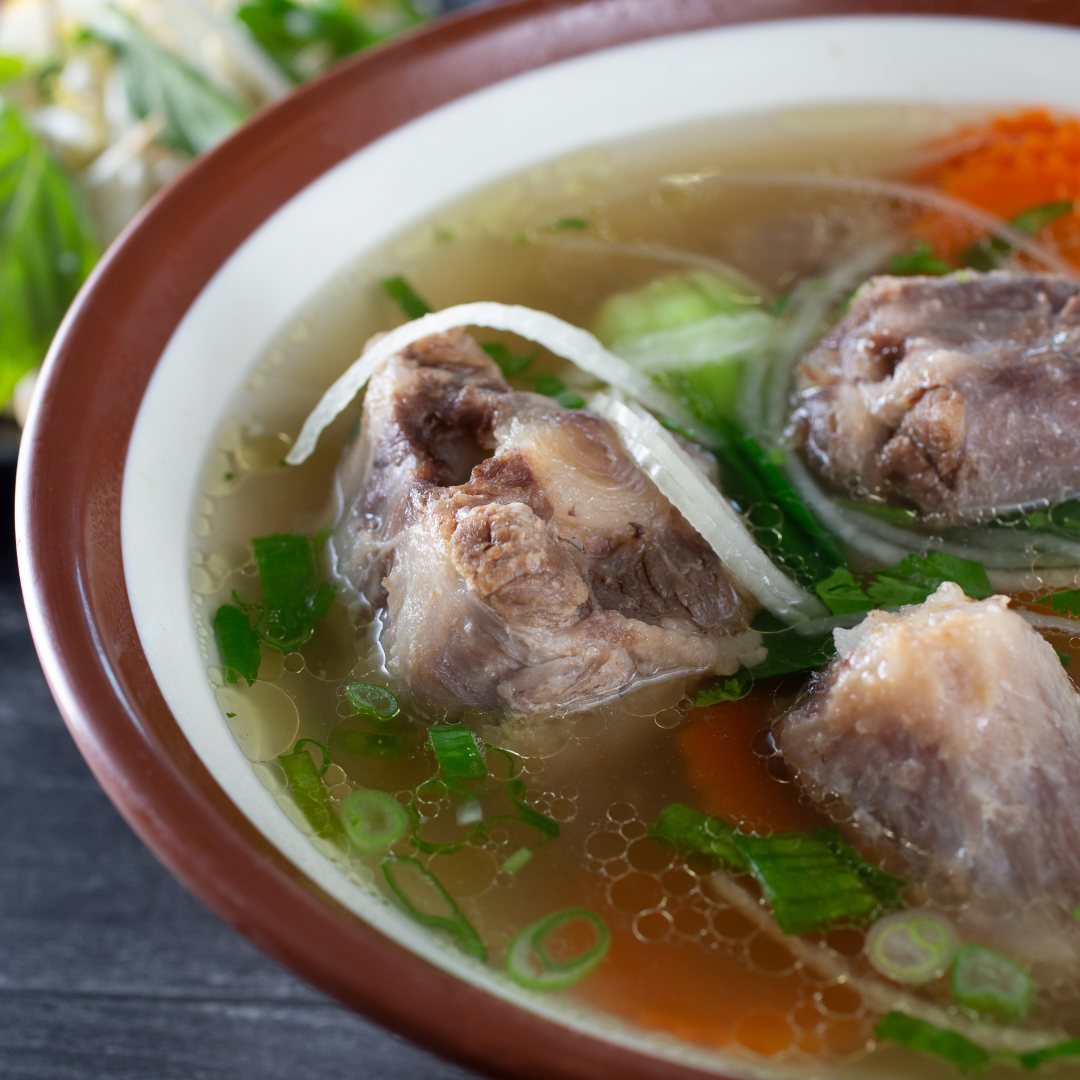
Next, I purchased grass-fed oxtail and started making Vietnamese pho the traditional way. The pho turned out rich and fatty. When I put the broth in the fridge, the gelatin would stiffen, so I knew I had a good batch.
Healing from the Inside Out
After about a week of reduced processed food, and adding yogurt and bone broth, I began to notice improvements! She stopped scratching as much and was overall less irritated by her skin. She was healing from the inside out!
After seeing those improvements, I began experimenting with other probiotic foods and put bone broth into many of her meals. I even snuck bone broth into her milk to make sure she was getting a dose every day.
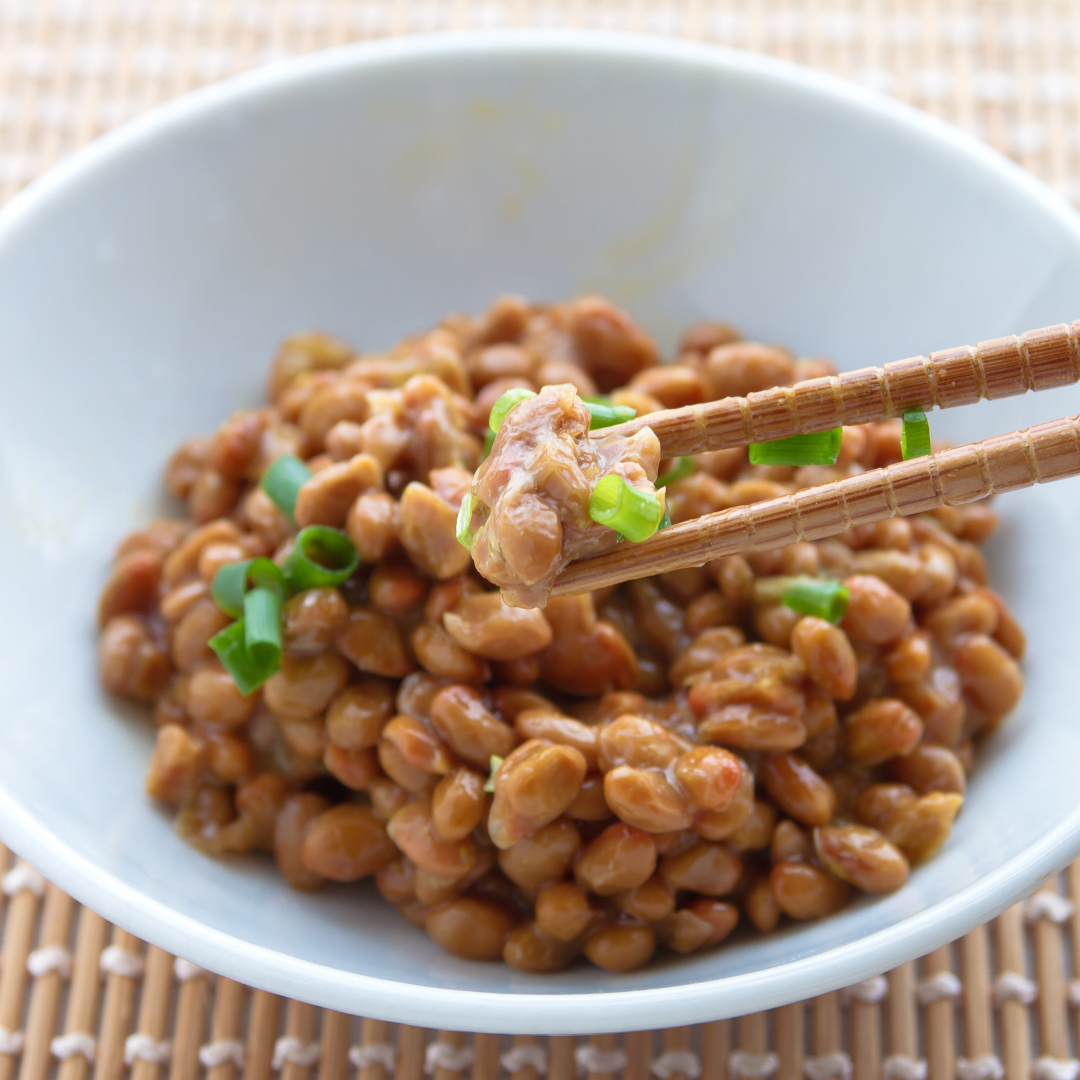
In addition, I fed her natto, a Japanese fermented soybean, and she gobbled it up! Furthermore, I also tried my best to eliminate even mildly processed foods from her diet. I replaced Cheerios with oatmeal. It turns out her tummy just didn’t do well with whatever preservatives were in them—she has no problem with oatmeal or other foods containing oats now. I also replaced store-bought bread with homemade, and convenience snacks with fruit or homemade alternatives. Little by little, day by day, her eczema was healing. The redness disappeared, and soon the awful wounds and itching were gone!
The Science Behind Why My Method Worked
Since I changed up our family’s diet, my daughter has been eczema-free for over a year now! We continue to avoid processed foods, eat many forms of probiotics, and drink chicken and oxtail bone broths regularly. My daughter’s skin, which used to look like she had road rash all over, is now beautiful, soft, and radiant. Although I can’t promise the same results for everyone, there’s science behind why this method healed my daughter.
When I stopped nursing my daughter, key ingredients present in breast milk were suddenly removed from her diet. At the same time, she was eating more processed foods, since she was eating with the rest of the family. Several scientific studies have shown that ingredients in processed foods disrupt the delicate balance in our guts. These ingredients create holes in the gut lining, allowing various particles to enter the bloodstream, which causes inflammation in the body. This inflammation often shows up as eczema. Foods such as probiotics and bone broth work like band-aids to heal the holes in the gut and reduce inflammation. There are many other foods that help heal the gut as well, such as high-fiber fruits, vegetables, and whole grains.
Key Steps to Take to Alleviate Eczema
- Avoid processed foods, excess sugar and sodium. Several studies (linked below) have shown the negative effects of the ingredients in processed foods on inflammation. If the ingredient is hard to pronounce, it’s probably an emulsifier, preservative or other additive that damages the gut lining and microbiota balance, which leads to eczema. Even a reduction of processed foods will make a big difference. Try to figure out which foods cause the most trouble. For us it was processed grains like store-bought bread and Cheerios. Reducing those foods and introducing gut-building foods made a huge difference!
- Add gut-building foods to your diet. A form of probiotics (like kefir, yogurt or kimchi) and bone broth are perfect for patching up a damaged digestive system (studies linked below). Whole grains, high-fiber fruits and vegetables also help build the gut microbiota.
I’ll be writing a post soon with more details about the effects of processed vs. whole foods on the gut lining. For now, I hope this article gives you hope for yourself or a loved one struggling with eczema. I hope the methods that worked for my family will bring relief to yours as well!
Blessings,
Katie
References:
Processed Foods Can Aggravate Eczema
Li, Y., Su, J., Luo, D., Duan, Y., Huang, Z., He, M., Tao, J., Xiao, S., Xiao, Y., Chen, X., & Shen, M. (2021). Processed food and atopic dermatitis: A pooled analysis of three cross‑sectional studies in Chinese adults. Frontiers in Nutrition, 8, 754663. https://doi.org/10.3389/fnut.2021.754663
Jang, W., Kim, M., Ha, E., et al. (2024). Association of maternal ultra-processed food consumption during pregnancy with atopic dermatitis in infancy. Nutrition Journal, 23, 47. https://doi.org/10.1186/s12937-024-00969-7
Molla, A. (2024). Dietary patterns and their impact on atopic dermatitis: A review. The Open Dermatology Journal, 18, e18743722306189. https://opendermatologyjournal.com/VOLUME/18/ELOCATOR/e18743722306189
Boggio, C. M. T. (2025). The Western diet and atopic dermatitis: The potential role of additives and microbiome disruption. Antioxidants, 14(4), 386. https://doi.org/10.3390/antiox14040386
Chiang, B. M., Ye, M., Chattopadhyay, A., Halezeroglu, Y., Van Blarigan, E. L., & Abuabara, K. (2024). Sodium intake and atopic dermatitis. JAMA Dermatology, 160(7), 725–731. https://doi.org/10.1001/jamadermatol.2024.1544
Health.com. (2024, March 3). How a salty diet might increase your risk of dry, itchy skin. Health. https://www.health.com/high-sodium-diet-eczema-risk-8664069
Probiotics Aid in Eczema Relief and Gut Health
Zheng, Y., Zhang, Z., Tang, P., Wu, Y., Zhang, A., Li, D., Wang, C.-Z., Wan, J.-Y., Yao, H., & Yuan, C.-S. (2023). Probiotics fortify intestinal barrier function: A systematic review and meta-analysis of randomized trials. Frontiers in Immunology, 14, Article 1143548. https://doi.org/10.3389/fimmu.2023.1143548
Hemarajata, P., & Versalovic, J. (2013). Effects of probiotics on gut microbiota: Mechanisms of intestinal immunomodulation and beyond. Therapeutic Advances in Gastroenterology, 6(1), 39–51. https://doi.org/10.1177/1756283X12459294
Sarita, B. (2025). A comprehensive review of probiotics and human health. Frontiers in Microbiology, 16, 1487641. https://doi.org/10.3389/fmicb.2024.1487641
Umborowati, M. A., Damayanti, D., Anggraeni, S., Endaryanto, A., Surono, I. S., Effendy, I., & Prakoeswa, C. R. S. (2022). The role of probiotics in the treatment of adult atopic dermatitis: A meta‑analysis of randomized controlled trials. Journal of Health, Population and Nutrition, 41(1), Article 37. https://doi.org/10.1186/s41043-022-00318-6
Sodré, C. S., de Albuquerque, T. M., & Ribeiro, C. (2022). The effect of probiotics on the clinical status of adult patients with atopic dermatitis: A randomized controlled trial. European Journal of Medical Research, 27, 247. https://doi.org/10.1186/s40001-022-00713-z
Wang, F., Wu, F., Chen, H., & Tang, B. (2023). The effect of probiotics in the prevention of atopic dermatitis in children: A systematic review and meta‑analysis. Translational Pediatrics, 12(4), 731–748. https://doi.org/10.21037/tp-23-200 PubMed
Andrade, P. D. S. M. A., de Oliveira, J. C., Silva, F. A., & de Sousa, I. V. (2022). Efficacy of probiotics in children and adolescents with atopic dermatitis: A randomized controlled trial. Frontiers in Nutrition, 9, 833666. https://doi.org/10.3389/fnut.2021.833666
Bone Broth As a Gut-Healing Food
Matar, A. (2025). Bone broth benefits: How its nutrients fortify gut barrier in health and disease. Nutrients, 17(4), 80691. https://pubmed.ncbi.nlm.nih.gov/40180691
Gao, G., Zhou, J., Jin, Y., Wang, H., Ding, Y., Zhou, J., Ke, L., Rao, P., Chong, P. H., Wang, Q., & Zhang, L. (2021). Nanoparticles derived from porcine bone soup attenuate oxidative stress‑induced intestinal barrier injury in Caco‑2 cell monolayer model. Journal of Functional Foods, 83, Article 104573. https://doi.org/10.1016/j.jff.2021.104573
Whole Grains, Fruits and Vegetables Help Gut Microbiota
Cui, Z., Zhao, L., Li, J., Meng, H., & Zhang, K. (2022). The effect of whole‑grain diet on the gut microbiota composition in elderly individuals. Frontiers in Nutrition, 9, Article 919838. https://doi.org/10.3389/fnut.2022.919838
Zhang, P. (2022). Influence of foods and nutrition on the gut microbiome and implications for intestinal health. International Journal of Molecular Sciences, 23(17), Article 9588. https://doi.org/10.3390/ijms23179588
Wang, Y., & Liu, J. (2023). Associations of fruit and whole grain intakes with gut microbial diversity. Food & Nutrition Research, 67, 9725. https://doi.org/10.29219/fnr.v67.9725